
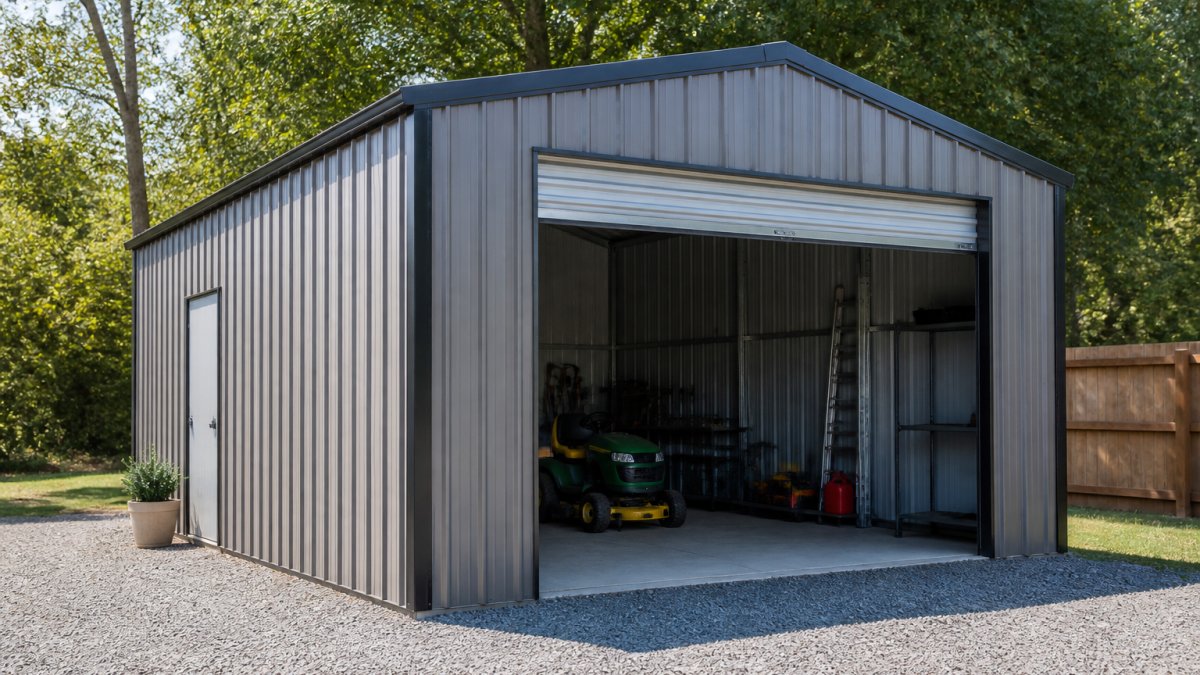

How to Choose Durable Metal Storage Shed Solutions
Last Updated: October 24, 2026
Quick Summary
A durable metal storage shed resists weather damage and maintains structural integrity for decades, unlike wooden structures that rot and require constant maintenance. Metal sheds with galvanized steel, reinforced panels, and proper anchoring withstand high winds, heavy snow loads, and extreme temperatures while eliminating the recurring maintenance burden of wood alternatives.
- Demand for residential storage sheds is forecast to expand 5.3% annually through 2029 according to Freedonia Group analysis
- 12-gauge steel frame represents the standard for structures that perform reliably over decades
- Hot-dip galvanizing creates a thicker, more durable coating than electrogalvanizing
- A proper foundation requires a 4-inch concrete slab reinforced with rebar or wire mesh extending at least 2 feet beyond the shed footprint
- Wood sheds require staining or sealing every 2-3 years while metal sheds require minimal maintenance beyond occasional inspection and cleaning
Table of Contents
- Why Durable Metal Storage Sheds Outperform Other Options
- Metal Storage Shed Kits: What to Look For in Construction and Materials
- Metal Shed Foundation Requirements: Getting Installation Right From the Start
- Metal Shed vs. Wood Shed: Durability, Maintenance, and Long-Term Value
- Metal Shed Installation: Professional Setup and Assembly Considerations
- Sizing Your Durable Metal Storage Shed for Your Needs
- Getting Your Metal Storage Shed Quote and Starting Your Project
- Frequently Asked Questions
Why Durable Metal Storage Sheds Outperform Other Options
A durable metal storage shed solution addresses a fundamental problem: equipment and tools deteriorate rapidly when exposed to weather. Unlike wooden structures that rot, warp, and require constant maintenance, metal sheds resist the elements while maintaining their structural integrity for decades. This isn’t theoretical, it’s a direct consequence of material science and how steel responds to environmental stress.
The residential outdoor storage market continues to expand as homeowners recognize this value proposition. According to Freedonia Group’s residential storage market analysis, demand for sheds and other residential outdoor-storage products is forecast to expand 5.3% annually through 2029. That growth reflects a simple reality: people are tired of replacing damaged equipment and paying for repairs that metal structures eliminate entirely.
What separates a truly durable metal storage shed from cheaper alternatives isn’t just the material, it’s the engineering. Galvanized steel, reinforced panels, and proper anchoring systems work together to create structures that withstand high winds, heavy snow loads, and extreme temperature swings. A freestanding shed positioned in an open yard faces forces that a structure tucked beside a fence never encounters.
At Terrapin Steel Buildings, we engineer every metal storage shed to meet local and state building codes, with factory-trained installation crews ensuring the structure performs as designed from day one. The difference between a shed that lasts 10 years and one that lasts 30 comes down to how it’s built and installed.
Metal Storage Shed Kits: What to Look For in Construction and Materials
When evaluating metal storage shed kits, focus on three core elements: gauge thickness, protective coatings, and panel construction. These determine whether your shed will weather storms or require repairs within a few years.
Steel gauge measures thickness, lower numbers mean thicker, stronger steel. A 12-gauge steel frame represents the standard for structures that need to perform reliably over decades. Thinner gauges (14, 16, 18) reduce cost but compromise durability in exposed locations.
Galvanized coating is your primary defense against rust. The zinc layer bonds to steel and sacrifices itself to corrosion, protecting the underlying metal. Not all galvanizing is equal, hot-dip galvanizing creates a thicker, more durable coating than electrogalvanizing. This matters in humid climates or coastal areas where salt accelerates rust formation.
Panel design affects both durability and appearance. Corrugated or ribbed panels provide structural rigidity without requiring internal bracing, distributing wind and snow loads across the surface. Smooth panels look cleaner but need additional reinforcement. The roof design is equally critical, pitched roofs shed water and snow more effectively than flat designs, reducing weight accumulation that can stress the frame.
That price range illustrates why understanding material specifications matters, you’re not just paying for a box, you’re paying for engineering that determines how long the structure lasts.
Key material specifications determine how long your metal storage shed will last and perform in your climate.
| Specification | Standard | Why It Matters |
|---|---|---|
| Steel gauge | 12-gauge | Thinner gauges compromise durability in exposed locations |
| Galvanizing process | Hot-dip | Creates thicker, more durable coating than electrogalvanizing |
| Panel design | Corrugated or ribbed | Provides structural rigidity without internal bracing |
| Roof design | Pitched | Sheds water and snow more effectively than flat designs |
Metal Shed Foundation Requirements: Getting Installation Right From the Start
The foundation is where many metal shed installations fail. A structure sitting on uneven ground or inadequate base will shift, stress the frame, and compromise the seal between panels. This creates entry points for water, accelerates rust formation, and can lead to structural misalignment within a few years.
A proper foundation begins with site assessment. The ground must be level, not approximately level, but verified with a level tool. Sloped terrain requires either grading or a stepped foundation that accounts for the slope. Drainage matters too; standing water around the perimeter accelerates corrosion and can lead to moisture inside the shed.
Concrete is the industry standard for metal storage shed foundations. A 4-inch slab, reinforced with rebar or wire mesh, provides the stability metal structures need. The slab should extend at least 2 feet beyond the shed footprint on all sides to prevent water from pooling at the base.
For detailed guidance on preparing concrete foundations for steel structures, anchor text covers the specific steps required to ensure your base is engineered correctly. Additionally, anchor text reviews the best foundation options available for steel buildings before installation begins, helping you choose the approach that fits your site conditions and budget.
Climate affects foundation depth in freeze-thaw regions. Where ground freezes seasonally, the foundation must extend below the frost line, typically 3-4 feet in northern states, to prevent heaving that shifts the structure. This is a local code requirement, not optional.
Metal Shed vs. Wood Shed: Durability, Maintenance, and Long-Term Value
The choice between metal and wood comes down to maintenance burden and lifespan. Wood sheds require regular upkeep, staining or sealing every 2-3 years, replacing rotted boards, treating for insects, to maintain structural integrity. Metal sheds require minimal maintenance beyond occasional inspection and cleaning.
Wood provides better insulation and a more traditional appearance, which matters if aesthetics align with your property’s style. Wood also allows easier modification and repair, replacing a damaged board takes basic carpentry. But wood deteriorates predictably.
Metal structures don’t rot, don’t attract termites, and don’t require seasonal staining. The trade-off is thermal conductivity, metal conducts temperature changes, so interior conditions track exterior weather more closely. For tool storage, this rarely matters. For climate-sensitive storage (seeds, certain equipment), you’d need to add insulation.
Wind resistance differs too. Wood sheds rely on weight and anchoring to resist wind. A well-built wooden shed can withstand significant wind, but the connection points, where the frame meets the foundation, are vulnerable.
For more on the specific advantages of steel construction, anchor text details the benefits of choosing metal over wood for long-term durability and value.
Cost comparison initially favors wood, basic wooden kits cost less upfront. But total cost of ownership shifts the equation. A wooden shed might cost $2,000-$3,000 initially but require $300-$500 annually in maintenance and repairs. A metal structure costs more upfront but eliminates that recurring maintenance burden.
Metal Shed Installation: Professional Setup and Assembly Considerations
Installation quality determines whether your metal storage shed performs as designed. A properly installed structure sits level, drains correctly, and resists wind. Poor installation creates gaps, allows water infiltration, and accelerates corrosion.
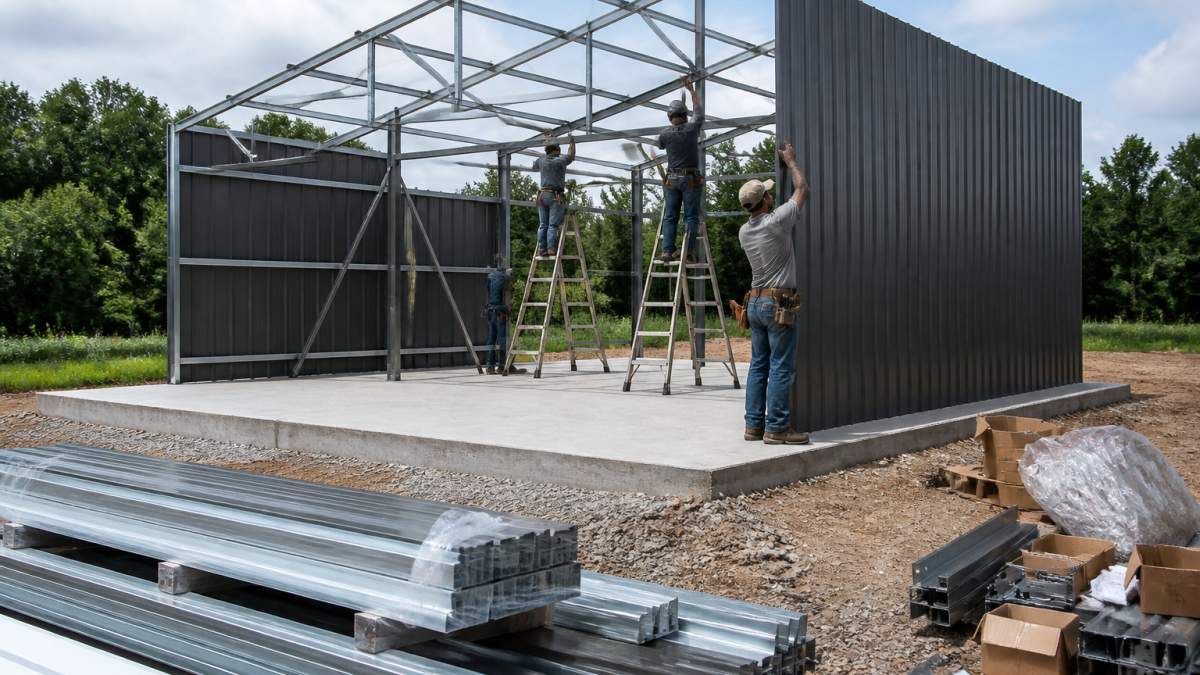
The process begins with foundation verification. Before any frame arrives, confirm the concrete is level and anchor bolts are positioned correctly. Misaligned bolts force frame adjustments that compromise panel fit and create gaps where water enters.
Frame assembly follows a specific sequence. The base rails bolt to the foundation first, establishing the level reference for everything above. Vertical posts go up next, braced temporarily to prevent tipping during installation.
Roof installation comes last. The roof structure must be square and level before panels attach. Even small deviations compound across the span, creating gaps where panels don’t meet properly.
Professional installation crews understand these details because they’ve executed the process hundreds of times. They know where problems typically occur and how to prevent them. Factory-trained, licensed, and insured installers carry insurance that protects you if something goes wrong.
For guidance on code-compliant installation, anchor text provides a comprehensive walkthrough ensuring your metal shed meets all local requirements and performs reliably.
Sizing Your Durable Metal Storage Shed for Your Needs
Shed size should match your actual storage needs with room for future growth. Undersizing creates immediate frustration, you’ll fill the space quickly and wish you’d chosen larger. Oversizing wastes money and takes up more yard space than necessary.
Start by inventorying what you’re storing. Tools, equipment, seasonal items, vehicles, each category has different space requirements. A typical garden shed (8×10 feet) holds hand tools, a mower, and seasonal decorations. A workshop or equipment storage shed (12×20 feet or larger) accommodates tractors, ATVs, or extensive tool collections.
Ceiling height affects usable storage too. Standard sheds offer 7-8 feet of interior height, adequate for most tools and equipment. Taller ceilings (9-10 feet) allow vertical storage and overhead racks, increasing capacity without expanding the footprint. If you’re storing tall equipment like ladders or long materials, height becomes critical.
Access matters as much as size. A single door works for small sheds, but larger structures benefit from double doors or garage-style overhead doors that make equipment loading easier. The door opening should accommodate your largest item, measure before choosing a shed size.
Metal storage sheds come in fully customizable dimensions. Custom sizes let you maximize yard space or fit specific equipment.
Getting Your Metal Storage Shed Quote and Starting Your Project
Starting your metal storage shed project requires clear communication about your needs, site conditions, and budget. A quality quote reflects the complexity of your installation, not just the shed size.
When requesting a quote, provide specifics: exact dimensions, your location (which determines wind and snow load requirements), site conditions (slope, drainage, soil type), and any local code requirements you’re aware of. Photos of your site help too, they show installers what they’re working with and let them identify potential complications early.
Budget for more than just the shed itself. Foundation costs vary by site conditions, a level, prepared site costs less than one requiring grading and drainage work. Permits and inspections add to the total, though they’re non-negotiable for structures above a certain size in most jurisdictions.
For guidance on budgeting for a metal building project, anchor text walks through the cost components and helps you plan your investment accurately.
Financing options matter when you’re making a significant investment. Confirm what financing options are available before committing to a quote.
Lead time affects your timeline. Installation scheduling depends on weather and contractor availability. Plan your project timeline accordingly, especially if you need the shed operational by a specific date.
Choosing a durable metal storage shed requires balancing material quality, installation expertise, and site-specific factors. The structures that perform best over decades aren’t always the cheapest initially, they’re the ones engineered correctly, installed professionally, and maintained appropriately.
Frequently Asked Questions
How long do durable metal storage sheds typically last?
Metal storage sheds built with galvanized steel and protective coatings can last 20 years or more when properly maintained and installed on a solid foundation. American-made steel structures engineered to local codes often carry 20-year manufacturer warranties on framing. Lifespan depends on climate exposure, maintenance frequency, and whether the shed receives regular inspections for corrosion or damage.
Do metal shed foundation requirements differ from wood sheds?
Yes. Metal sheds require a level, compacted foundation, concrete pad, gravel base, or concrete blocks, to prevent water pooling and corrosion at the base. Unlike wood sheds, metal structures are heavier and need proper anchoring to resist wind. A solid foundation also prevents settling and door misalignment. Local building codes often specify foundation depth and frost-line requirements for your region.
Are metal storage shed kits difficult to assemble if I hire professionals?
Professional installation by factory-trained, licensed crews removes assembly complexity entirely. They handle site preparation, foundation setup, panel alignment, and roof installation to code. DIY kits are possible but require tools, multiple people, and time. Professional installation ensures proper weatherproofing, wind resistance, and warranty compliance, making it the safer choice for most homeowners and small businesses.
How do I prevent rust in a metal storage shed in wet climates?
Choose sheds with galvanized steel framing and protective coatings designed for high-moisture areas. Ensure proper foundation drainage and ventilation to reduce interior condensation. Install gutters and downspouts to direct water away from the structure. Regular inspections catch early corrosion. Engineer-certified American-made structures built to local codes typically include rust-resistant specifications suited to regional weather patterns.
