

Are Rent-to-Own Steel Buildings Worth the Investment?
Last Updated: October 25, 2026
Quick Summary
A rent to own steel building is a financing arrangement where monthly payments build equity toward eventual ownership of a prefabricated metal structure, typically over 24 to 72 months. This model works well for property owners needing durable storage or workspace but facing cash flow constraints or credit challenges, offering lower upfront costs and easier approval than traditional loans.
- Monthly payments are typically lower than traditional loan payments because the provider retains ownership risk during the lease period.
- Rent-to-own steel buildings can be customized to your exact dimensions, local building codes, and specific use case rather than forcing standard footprints.
- Total cost over the full lease term is typically higher than traditional financing, but requires minimal upfront capital and no credit approval.
- Properly maintained metal buildings last 40+ years, supporting the financial case for ownership if you plan to keep the building long-term.
- Site preparation costs including concrete slab, grading, permits, and installation can add 20% to 40% to your total project cost.
Table of Contents
- How Rent-to-Own Steel Buildings Work
- Lower Upfront Costs and Monthly Payment Affordability
- Rent-to-Own Metal Building Plans and Customization
- Steel Building Financing Options: Rent-to-Own vs. Loans
- Metal Building Lease vs. Buy: Total Cost of Ownership
- Metal Building Cost with Concrete Slab and Hidden Expenses
- Is Rent-to-Own Right for Your Property and Timeline?
- Frequently Asked Questions
How Rent-to-Own Steel Buildings Work
A rent to own steel building is a financing arrangement where you make monthly payments toward eventual ownership of a prefabricated metal structure. Unlike traditional leasing, a portion of each payment builds equity that counts toward purchase.
The mechanics are straightforward. You select your building specifications, whether a carport, garage, barn, or commercial shop, and enter into a lease agreement with a purchase option. Monthly payments are structured so that a defined percentage goes toward the building’s purchase price.
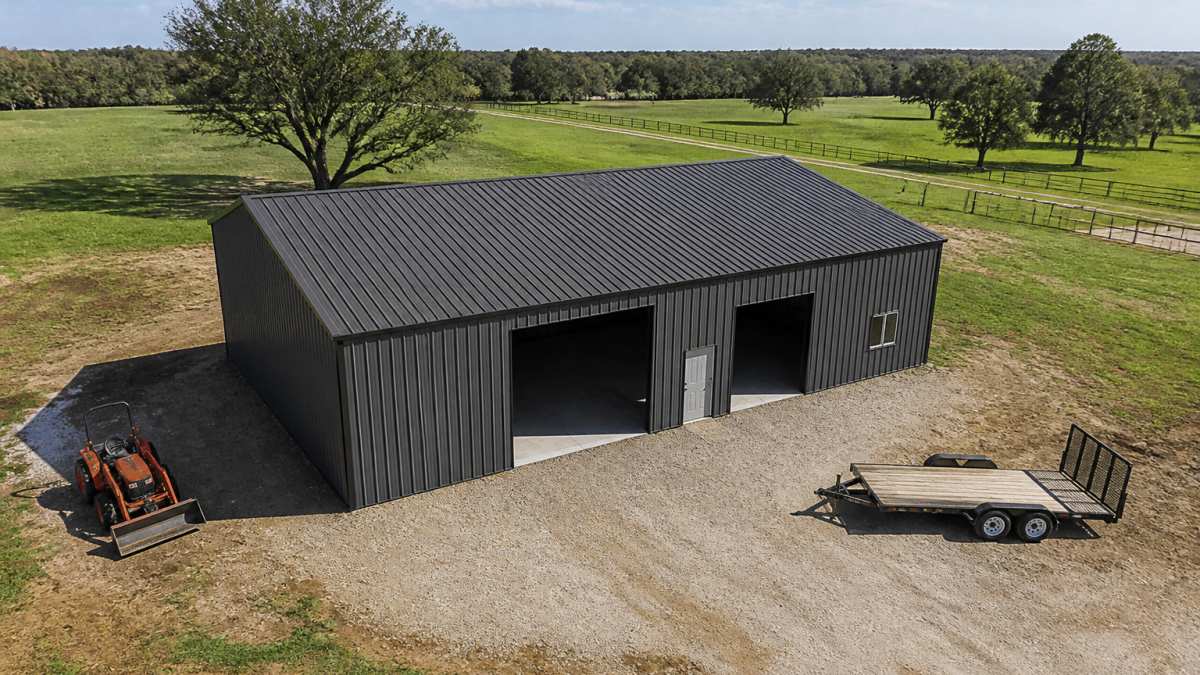
The appeal lies in the flexibility and lower barriers to entry. Property owners with tight budgets, limited credit history, or uncertainty about long-term building needs find rent-to-own arrangements more accessible than traditional financing. Other providers market this option as a path to ownership without requiring a substantial upfront investment or passing a rigorous credit evaluation.
Lower Upfront Costs and Monthly Payment Affordability
The primary draw of rent-to-own steel buildings is the dramatically reduced upfront cost compared to purchasing outright or financing through a traditional loan. Instead of paying thousands upfront as a down payment, you begin with a modest initial payment and then manage predictable monthly occupancy costs.
Monthly payments under rent-to-own arrangements are typically lower than loan payments for the same building because the provider retains ownership risk during the lease period. Your cash flow remains stable and predictable month to month. This predictability matters enormously for farmers managing seasonal income, small business owners with variable revenue, or homeowners on fixed budgets.
Providers advertise no-credit-check eligibility up to certain thresholds, with higher limits available to those willing to undergo credit evaluation. This removes a significant barrier for buyers with past financial difficulties or thin credit histories.
The trade-off is transparency about total cost. While monthly payments feel manageable, the cumulative cost over a 36- to 72-month lease often exceeds what you’d pay through other financing methods. Providers acknowledge this reality: the convenience and lower upfront barrier come at a premium over the full term.
Rent-to-Own Metal Building Plans and Customization
One of the strongest advantages of rent-to-own steel buildings is the ability to customize the structure to your exact needs. Unlike buying a pre-made shed or carport, a rent-to-own metal building can be engineered to your property’s dimensions, local building codes, and specific use case.
Customization typically covers dimensions, roof pitch, door placement, ventilation, insulation, and interior layout. Agricultural customers can specify equipment access and livestock accommodation. Commercial users can design workshop layouts, office areas, or storage configurations. Residential customers can match aesthetic preferences and property constraints.
The customization process involves working with the provider’s design team to develop plans that meet local building codes and your functional requirements. Review the custom steel design and installation guide for best practices on planning and executing your customized building. Engineer-certified designs ensure the structure passes inspection and performs reliably in your climate.
Customization does extend the timeline slightly, but this is far faster than traditional stick-built construction. The prefabricated nature of steel buildings means most components are manufactured off-site, then assembled on your property by factory-trained crews.
Steel Building Financing Options: Rent-to-Own vs. Loans
Understanding how rent-to-own compares to traditional financing helps clarify whether it’s the right choice for your situation. Each path has distinct advantages and drawbacks.
Rent-to-Own Steel Building:
- Lower upfront cost and easier approval
- Predictable monthly payments
- Provider handles major maintenance during lease
- Higher total cost over full term
- Ownership transfer at lease end
Traditional Bank Loan:
- Lower total cost if you keep the building long-term
- Ownership from day one
- Requires substantial down payment
- Requires credit approval and documentation
- You handle all maintenance costs
Cash Purchase:
- Lowest total cost
- Complete ownership and control
- No monthly obligations
- Requires significant capital upfront
- Immediate maintenance responsibility
Leasing (No Ownership Path):
- Minimal upfront cost
- No ownership or maintenance responsibility
- Monthly payments continue indefinitely
- No equity building
- No long-term investment value
For property owners with strong credit and available capital, a traditional loan often delivers the lowest total cost of ownership. You pay interest, but you own the building from day one and can use it as collateral or sell it later. For buyers with limited upfront capital or uncertain long-term needs, rent-to-own bridges the gap between affordability and eventual ownership.
The key distinction: rent-to-own is a path to ownership with flexibility on entry, while traditional loans assume you can afford the down payment and qualify for credit. The Consumer Financial Protection Bureau provides guidance on evaluating financing options and understanding payment structures, which can help clarify which approach aligns with your financial situation and timeline.
Rent-to-own steel buildings differ from traditional loans, cash purchases, and leasing in upfront costs, approval requirements, and long-term ownership.
| Financing Method | Upfront Cost | Ownership | Key Advantage |
|---|---|---|---|
| Rent-to-Own | Lower | At lease end | Easier approval, predictable payments |
| Traditional Bank Loan | Substantial down payment | Day one | Lower total cost long-term |
| Cash Purchase | Full amount upfront | Immediate | Lowest total cost |
| Leasing Only | Minimal | None | No maintenance responsibility |
Metal Building Lease vs. Buy: Total Cost of Ownership
Comparing total cost of ownership requires looking beyond monthly payment amounts. The real financial picture emerges when you account for the full lease term, maintenance responsibility, and what happens at lease end.
A rent-to-own arrangement typically costs more in aggregate than purchasing outright or financing through a traditional loan, but the comparison depends heavily on your timeline and circumstances.
Consider a practical example: a metal building might cost more to purchase outright. Under a rent-to-own arrangement, you might pay monthly over a set term. A traditional loan with a down payment and interest might total less over the same period.
The lease-versus-buy decision also hinges on maintenance costs. During a rent-to-own lease, the provider typically handles structural repairs, roof maintenance, and major issues. Once you own the building outright, these costs fall to you.
Industry data on metal building durability indicates that properly maintained metal buildings last 40+ years, making them a sound long-term investment. This longevity supports the financial case for ownership if you plan to keep the building for decades.
Metal Building Cost with Concrete Slab and Hidden Expenses
The quoted price for a rent to own steel building typically covers the structure itself, the framing, panels, and roof. What it often doesn’t include are site preparation costs that can significantly affect your total investment. Understanding these hidden expenses is critical for accurate budgeting.
A concrete slab foundation is essential for most metal buildings. Learn how to prepare a concrete foundation for a steel garage to understand the requirements and costs involved. Without it, the structure sits directly on soil, which invites moisture, settling, and accelerated deterioration.
Other site preparation expenses include:
- Grading and drainage work
- Utility connections for power or water
- Permit and engineering fees
- Site access and delivery logistics
- Anchoring and wind bracing
These expenses can add 20% to 40% to your total project cost. Typically, the property owner is responsible for site preparation, while the provider handles the building delivery and installation. Guidance on metal building foundation requirements can help you understand what your property needs and budget accordingly.
Installation labor is another line item. Factory-trained, licensed, and insured installation crews charge for assembly and site setup. Some providers include installation in the rent-to-own payment; others charge separately. Clarify this upfront to avoid surprises.
Permits and inspections vary by jurisdiction but are non-negotiable. Your local building department will require plans review, permits, and final inspection before you can legally occupy the building. Structures from reputable providers come engineer-certified to meet building codes, which simplifies approval.
Is Rent-to-Own Right for Your Property and Timeline?
Rent-to-own steel buildings work best for specific situations. Identifying whether your circumstances align with this financing model prevents costly mistakes.
Rent-to-own is a strong fit if you:
- Need immediate shelter or storage but lack upfront capital
- Have limited or imperfect credit history
- Prefer predictable monthly expenses over variable maintenance costs
- Plan to own the building long-term (10+ years)
- Want flexibility to upgrade or relocate without permanent commitment
- Operate a seasonal business with variable cash flow
- Are testing whether a permanent structure makes sense before committing fully
Rent-to-own is less suitable if you:
- Have strong credit and access to traditional financing
- Plan to keep the building fewer than 5 years
- Want the absolute lowest total cost of ownership
- Prefer to own the asset from day one
- Expect significant structural modifications mid-lease
- Have a tight monthly budget with no flexibility for payment increases
Timeline matters enormously. If you need workspace or storage within 30 days, rent-to-own delivers speed. Traditional construction takes months or years. Leasing-only options are faster but leave you with no ownership at the end.
Your property’s permanence also factors in. If you own the land outright and plan to stay for decades, building ownership creates lasting value. If you rent the land or anticipate relocating, rent-to-own’s transferability becomes less relevant, and you might prefer a leasing-only arrangement.
Consider your intended use. Agricultural operations benefit from rent-to-own’s customization and low upfront cost. Small businesses using the building as operational space gain from predictable monthly costs and provider-managed maintenance.
Resources on evaluating metal building financing options can help you model different scenarios and compare total costs across rent-to-own, traditional loans, and cash purchase paths. Running these numbers with your actual building specifications and local costs provides clarity that generic comparisons cannot.
Rent-to-own steel buildings solve a real problem: they let you secure durable, customizable workspace or storage without the capital barrier of outright purchase or the credit requirements of traditional loans. At Terrapin Steel Buildings, we offer engineer-certified, American-made structures with factory-trained installation crews and a 20-year warranty on 12-gauge steel framing. Request a quote to explore how a customized rent-to-own steel building can serve your property and budget.
Frequently Asked Questions
What are the main advantages of renting to own a steel building?
Rent-to-own steel buildings offer lower upfront costs, spreading payments over 24-72 months to improve cash flow. You avoid large initial investments while building equity toward ownership. Many providers offer flexible eligibility, with some approving applicants without credit checks up to certain limits. The structure is customizable to your property and needs, and you gain the durability and low-maintenance benefits of steel construction throughout the rental period.
How does a rent-to-own steel building plan work?
In a rent-to-own plan, you make monthly payments over a set term (typically 24-72 months). A portion of each payment goes toward the purchase price, while the remainder covers the rental cost. At the end of the term, you own the building outright. Some agreements allow early payoff without penalty. Terms, credit requirements, and the amount of each payment that applies to ownership vary by provider, so review the contract carefully before signing.
What should I check in a steel building rent-to-own agreement?
Review the total cost over the full payment term to understand whether rent-to-own is cheaper than outright purchase or financing. Confirm what happens if you want to pay early and whether there are penalties. Check whether the agreement covers delivery, installation, and site preparation, or if those costs are separate. Verify warranty coverage, maintenance responsibilities, and what occurs if the building is damaged. Ensure the contract specifies the exact customizations and materials included.
Do rent-to-own payments include delivery, installation, and a concrete slab?
This varies by provider and agreement. Some rent-to-own offers include delivery and installation by factory-trained crews, while others charge these as separate line items. A concrete slab is often a separate cost and may be required before installation begins. Site preparation, permits, and local inspection fees are typically the buyer’s responsibility. Always ask the provider to itemize what is and is not included in your monthly payment and total contract price before committing.
