
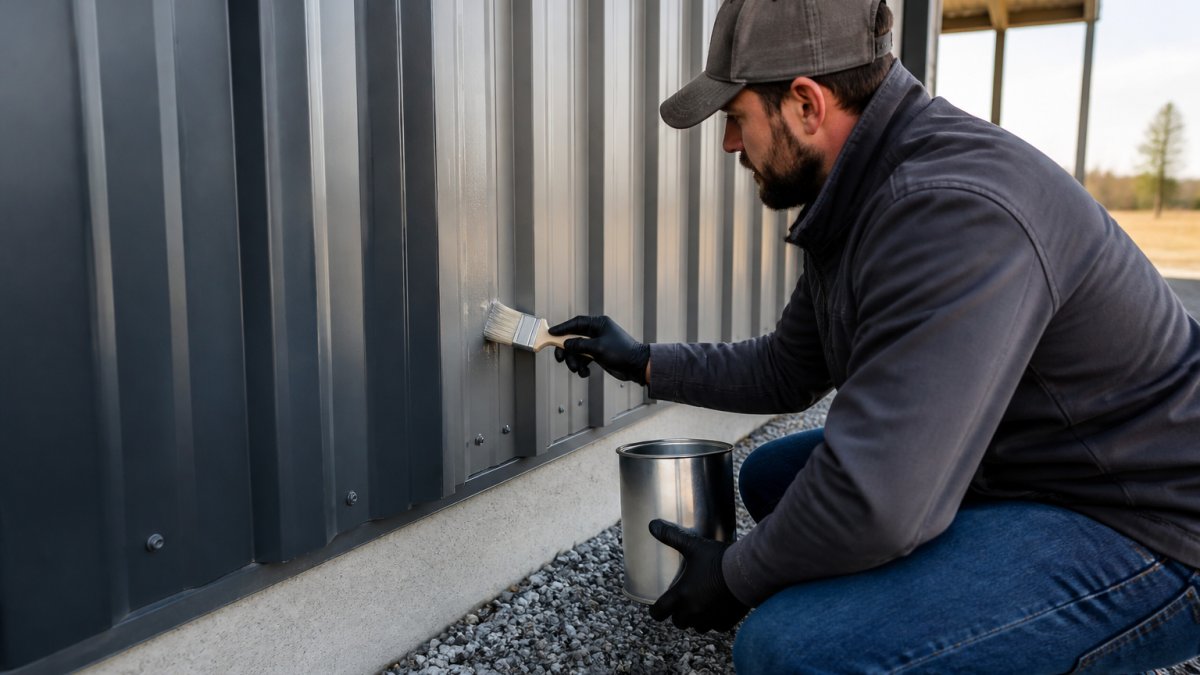

How to Prevent Rust on Steel Buildings: 2026 Guide
Table of Contents
- Why Steel Buildings Rust (and What It Costs You)
- Essential Preparation: Surface Prep and Material Selection
- Moisture Control: Ventilation and Humidity Barriers
- Protective Coatings: Best Rust Inhibitor for Steel Buildings
- How to Remove Rust from Metal Siding (Before It Spreads)
- Your Steel Building Maintenance Schedule: Seasonal and Climate-Specific
- DIY vs. Professional Intervention: When to Call for Help
- Frequently Asked Questions
Last Updated: October 4, 2026
Why Steel Buildings Rust (and What It Costs You)
Rust is the slow theft of your building’s strength. Learning how to prevent rust on steel buildings protects the structure, the contents, and your investment.
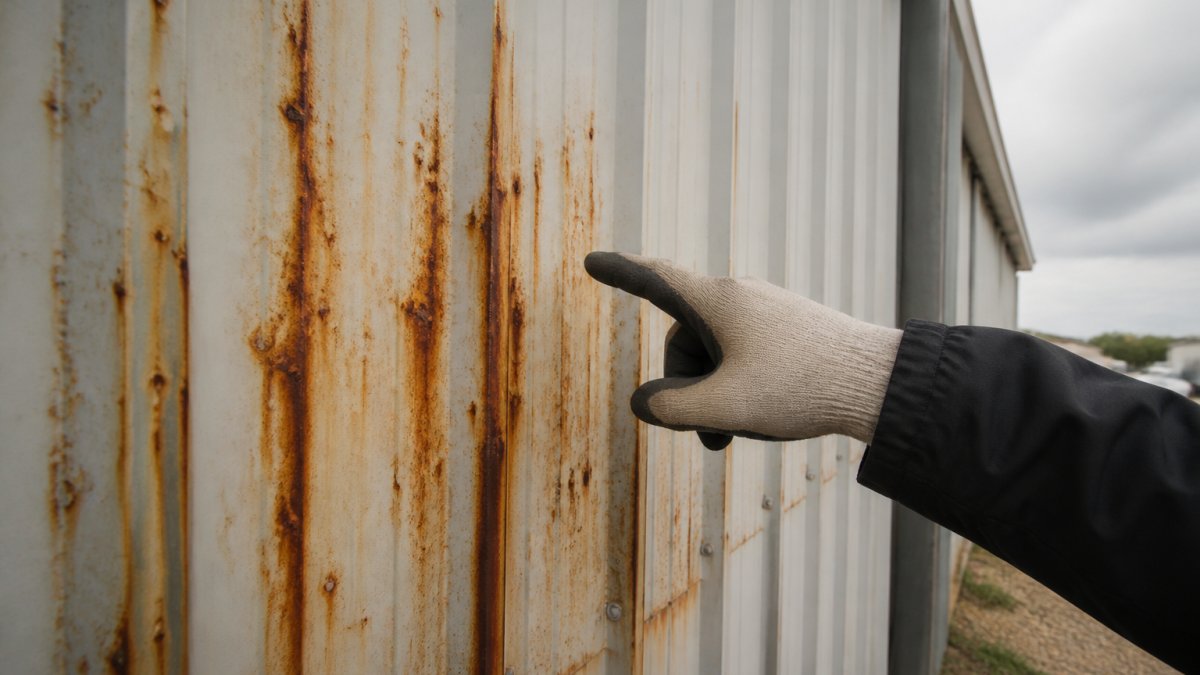
Steel rusts because iron reacts with oxygen and water, forming iron oxide that flakes off, exposes fresh metal, and eats into structural integrity.
Rust rarely attacks everywhere at once. It starts where water sits and air can’t dry things out:
- Cut edges and drilled holes with no protective layer
- Scratches from tools, branches, or lawn equipment
- Roof panel seams and fastener heads
The cost isn’t just cosmetic. Rust streaks mean the protective layer is gone, water reaches the steel beneath, and repair gets pricier every season you wait.
Ignoring small rust streaks is a common mistake. A spot the size of a coin can spread into a pitted panel within a year, and pitted steel can’t be sanded back to smooth. You replace it instead of repairing it.
Essential Preparation: Surface Prep and Material Selection
Surface preparation decides whether any coating lasts. A protective sealant bonds to clean, dry, dull metal. It slides right off dirt, oil, and shiny mill scale.
Before you apply anything, strip the surface down:
- Scrub off dirt, pollen, and bird droppings with a stiff brush and mild detergent.
- Rinse with clean water and let the panel dry fully.
- Scuff glossy or smooth areas with fine abrasive pads so the coating can grip.
- Wipe the surface with a solvent made for metal to lift oils and fingerprints.
- Prime bare or scratched spots within a day of cleaning.
Skip a step and you’ll watch the coating peel within a season.
Galvanized Steel and Zinc Coating: Your First Line of Defense
Galvanized steel carries a zinc coating that sacrifices itself to protect the iron beneath. When moisture hits, the zinc corrodes first, keeping the steel intact even after the coating takes hits.
Zinc blocks water and oxygen from reaching the steel and shields nearby scratches by corroding around the exposed edge, which is why galvanized panels and 12-gauge framing outlast bare steel in wet climates.
When you buy a building, ask what protects the steel.
Cleaning Techniques Before Any Coating
Cleaning is not optional, and the method matters. Abrasive cleaning removes loose rust, chalky oxidation, and flaking paint: wire brushes and sanding discs for small areas, power washing for large panels.
Match the tool to the job:
- Light dust and grime: soft brush and garden hose
- Chalky oxidation: medium abrasive pad with detergent
- Loose rust: wire brush or sanding disc down to bare metal
Always work top to bottom so dirty water doesn’t run over clean areas, then let the metal dry before you coat it.
Moisture Control: Ventilation and Humidity Barriers
Moisture control is the cheapest rust prevention you’ll ever run, but only if you know where the water comes from. Trapped vapor condenses on cold panels overnight and feeds rust from the inside out. The fix isn’t just “add vents”, it’s managing the dew point so interior air never saturates on cold steel.
How Condensation Actually Forms on Steel
Steel conducts heat roughly 1,000 times faster than wood, so panels track outdoor temperatures within minutes. When warm, moist interior air touches a panel below the dew point, water beads onto the metal, first on the underside of roof panels, north-facing walls, and steel thermally bridged to the exterior.
Three levers control whether that happens:
- Air temperature, warmer air holds more moisture before it saturates.
- Relative humidity (RH), the closer interior RH sits to 100%, the smaller the temperature drop needed to hit the dew point.
- Surface temperature, the colder the steel, the more likely condensation forms.
A practical target: keep interior RH below about 60% and steel surfaces at least 5°F above the interior dew point. A digital hygrometer and infrared thermometer can help check both in seconds.
Ventilation Strategies That Move Air, Not Just Open Holes
Ventilation only works when air enters low, exits high, and has a clear path between. Placement matters more than vent count:
- Soffit inlets + ridge outlet, the most reliable stack effect; warm air rises and exits at the peak while cooler air is drawn in at the eaves.
- Gable-end vents, useful for cross-flow in wide, low-slope buildings where the ridge is short.
- Powered or turbine vents, worth it in humid climates or where equipment generates heat and moisture (welding, washing, livestock).
A common mistake is installing only high vents. Without a low inlet, there’s no pressure differential to drive flow. On barns and shops, that airflow also dries equipment and floors.
Vapor Barriers and Insulation: Stop Vapor Before It Reaches Steel
A vapor barrier stops ground and interior vapor from rising into the structure. Two placement rules:
- Vapor retarder goes on the warm side of the assembly. In cold climates that means the interior face of the wall or ceiling; in hot, humid climates it means the exterior face. Put it on the wrong side and you trap moisture against the steel.
- Under-slab vapor barriers belong under the slab, not on top. A 6-mil (or thicker) polyethylene sheet under the pour blocks ground vapor from wicking up into the building.
Spray foam and rigid board insulation also act as vapor retarders at sufficient thickness, warming the steel above the dew point. That dual function, blocking vapor and raising surface temperature, is why insulated buildings rust far more slowly than bare-metal ones.
Watch these trouble spots:
- Unvented corners where air goes still
- Roof panels above parked equipment
- Wall bases near soil or gravel
Check your building after the first cold snap of the season. That’s when warm, humid air inside meets cold panels and condensation shows up as beads of water. If you see it, add ventilation and a dehumidifier before rust does, and check the dew point, not just the temperature.
Protective Coatings: Best Rust Inhibitor for Steel Buildings
Rust inhibitors seal the surface and interrupt oxidation. Some also contain zinc or other metals that corrode in place of the steel, adding a second layer of defense.
Here’s how the main coating types compare:
| Coating Type | Best For | Typical Lifespan | Notes |
|---|---|---|---|
| Zinc-rich primer | Bare or scratched steel | Long | Sacrificial protection |
| Epoxy primer | Damp or humid areas | Medium to long | Strong moisture barrier |
| Powder coating | Factory-finished panels | Long | Cured before installation |
| Acrylic topcoat | UV and weather exposure | Medium | Needs recoating over time |
| Protective sealant | Seams and fasteners | Short to medium | Reapply as needed |
For most buildings, a zinc-rich primer plus a quality topcoat gives the best balance of cost and protection, while powder coating on factory panels adds a durable, chip-resistant finish.
Reapply sealant at seams and fastener heads every few years. Those small gaps are where water gets in first.
How to Remove Rust from Metal Siding (Before It Spreads)
Removing rust from metal siding early is far easier than replacing panels later. Catch it while it’s surface-level and you can restore the panel in an afternoon.
Follow these steps:
- Test the depth. Press a screwdriver tip into the rust. If it sinks in, the panel is pitted and likely needs replacement.
- Protect the area. Tape off nearby surfaces and lay drop cloths to catch debris.
- Remove loose rust. Wire brush or sand the area down to bare, shiny metal.
- Clean the surface. Wipe away dust and oil with a metal-safe solvent.
- Prime immediately. Apply a rust-inhibiting primer within hours of cleaning.
- Topcoat the repair. Match the surrounding color with a quality topcoat.
- Seal the edges. Run a protective sealant around the repair to keep water out.
Work on dry days with low humidity. Moisture in the air can ruin a fresh coat before it cures.
Surface rust is a repair job. Pitted rust is a replacement job. The difference comes down to how deep the damage has gone, so test before you commit to either.
Your Steel Building Maintenance Schedule: Seasonal and Climate-Specific
A steel building maintenance schedule turns rust prevention into a routine instead of an emergency. The right schedule depends on your climate, since wet, salty, or humid air speeds up corrosion. Here’s a cadence you can put on a calendar.
The Baseline Seasonal Framework
Every building, regardless of climate, should run this four-season loop:
- Spring: Inspect for winter damage, rust streaks, and loose fasteners
- Summer: Clean panels, touch up scratches, and reapply sealant
- Fall: Clear gutters and drains before rain and snow arrive
That baseline is the floor, not the ceiling. Your climate determines how much you add on top.
Climate-Specific Inspection Cadence
Corrosion rate is driven by time-of-wetness, how many hours per day the steel stays damp. Use the climate band below to set your inspection interval:
| Climate | Key Corrosion Driver | Full Inspection | Touch-Up / Recoat |
|---|---|---|---|
| Coastal / salt air | Airborne chloride | Every 3 months | Recoat every 3-5 years |
| Humid subtropical | High RH, condensation | Every 4 months | Recoat every 5-7 years |
| Industrial / urban | Acid deposition, pollutants | Every 4 months | Recoat every 5-7 years |
| Temperate / mixed | Seasonal wet-dry cycling | Every 6 months | Recoat every 7-10 years |
| Arid / desert | UV degradation, blowing dust | Every 6 months | Recoat every 8-12 years |
| Cold / snow belt | Freeze-thaw, road salt | Every 4 months | Recoat every 5-7 years |
These intervals are starting points. If you find rust, shorten the interval by one step until two consecutive inspections come back clean.
What Each Climate Actually Demands
Coastal and salt-air zones. Chloride ions break down zinc coatings faster than almost anything else.
Humid subtropical zones. Condensation is the enemy, not rain.
Temperate and mixed zones. Wet-dry cycling does the damage, every wetting event restarts the corrosion cell.
Arid and desert zones. Water is scarce, but UV is brutal.
Cold and snow-belt zones. Road salt and freeze-thaw cycling are the twin threats.
Building a Walk-Around Checklist
Walk the building on your climate cadence and check the same items every time:
- Roof panels and ridge caps for rust streaks or lifted fasteners
- Wall bases within 3 feet of soil, gravel, or concrete
- Seams, laps, and fastener heads for sealant failure
Log the date, weather, and findings. After a year you’ll see your building’s actual corrosion pattern and can tune the schedule to it.
There is no single “correct” maintenance schedule, there is only the schedule your climate demands. Match the cadence to your corrosion driver, log every inspection, and shorten the interval the moment you find rust.
DIY vs. Professional Intervention: When to Call for Help
DIY works for surface rust, small touch-ups, and routine cleaning. Call a professional when rust reaches structural steel, panels are pitted through, or damage covers large areas.
Use these thresholds to decide:
| Situation | DIY or Pro | Why |
|---|---|---|
| Light surface rust | DIY | Sand, prime, and topcoat |
| Scratches and chips | DIY | Small touch-up repairs |
| Pitted panels | Professional | May need panel replacement |
| Rust on framing | Professional | Structural integrity at risk |
| Large-scale corrosion | Professional | Needs blasting and recoating |
| Rust around fasteners | Either | Sealant and inspection may suffice |
Safety matters too. Chemical treatments, blasting, and roof work carry real risks. If a job needs fall protection, heavy equipment, or harsh chemicals, hire trained crews.
This is also where a quality build pays off.
Frequently Asked Questions
What can I coat steel with to prevent rust?
For steel buildings, the most effective coatings are zinc-rich primers followed by a topcoat of acrylic or polyurethane paint. Powder coating offers a durable factory-applied option. For existing structures, a rust-inhibiting primer plus a protective sealant works well. Always prepare the surface first by removing dirt, oil, and existing rust with abrasive cleaning or a wire brush. Apply coatings when the metal is dry and temperatures are between 50°F and 80°F for proper adhesion.
How often should I inspect my steel building for signs of corrosion?
Inspect your steel building at least twice a year, ideally in spring and fall. If you live in a coastal or high-humidity area, check quarterly. Look for rust streaks, bubbling paint, and white or red powdery deposits on purlins, girts, and C-sections. Pay close attention to areas around fasteners, seams, and the base of walls where moisture collects. Early detection lets you treat small spots before they compromise structural integrity.
Can you stop rust once it has already started on a steel building?
Yes, if you act before the rust penetrates deeply. Remove surface rust using abrasive cleaning, a wire brush, or a chemical rust remover. Then apply a rust inhibitor and a protective topcoat. For light surface rust on metal siding, this restores protection. If rust has caused pitting or weakened the steel alloy, a professional assessment is needed. Catching oxidation early is far cheaper than replacing panels or structural members.
Does proper ventilation really prevent rust on steel structures?
Ventilation is critical because it reduces condensation inside your building. Without airflow, warm moist air trapped inside condenses on cooler steel surfaces, creating the moisture barrier that drives oxidation. Ridge vents, soffit vents, and exhaust fans keep humidity low. In agricultural buildings, remove wet bedding and equipment promptly. A well-ventilated steel building stays drier, which directly slows corrosion and extends the life of your investment.
Rust never takes a season off, and neither should your maintenance plan. With the right prep, coatings, and schedule, your steel building can stay strong for decades. Terrapin Steel Buildings makes that easier with 100% American-made steel, a 20-year manufacturer’s warranty on 12-gauge framing, and engineer-certified designs built for your climate. Request a quote today and get a structure that’s ready to stand up to the weather from day one.