
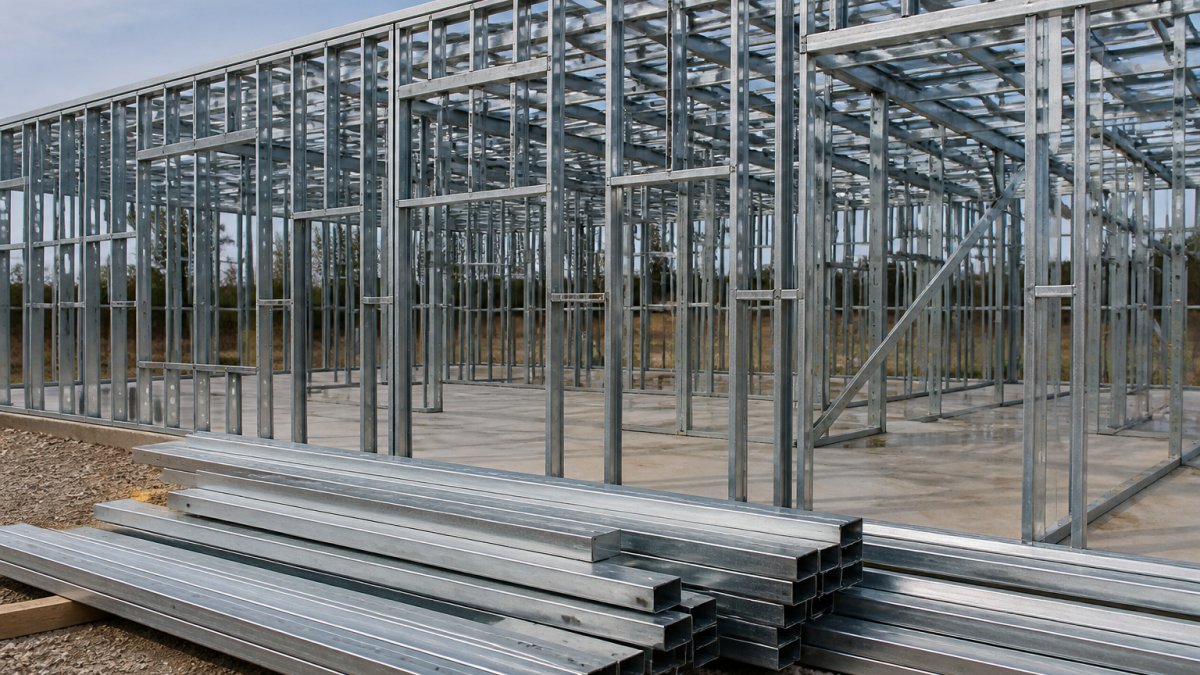

Benefits of 12 Gauge Steel Framing for Buildings
Table of Contents
- Why 12 Gauge Steel Framing Outperforms Thinner Metal
- 12 Gauge Steel Thickness: What the Numbers Actually Mean
- 12 Gauge vs 14 Gauge Steel Framing: Strength, Load, and Cost
- Wind, Snow, and Structural Performance You Can Count On
- Light Gauge Steel Framing Disadvantages (and How 12 Gauge Solves Them)
- How to Choose Steel Gauge for a Metal Building
- Long-Term Value: Durability, Warranty, and Maintenance
- Conclusion: Is 12 Gauge Steel Framing Right for Your Property?
- Frequently Asked Questions
Last Updated: October 9, 2026
Why 12 Gauge Steel Framing Outperforms Thinner Metal
Steel buildings fail at the frame, not the panels. When a structure sags, twists, or loses its shape after a few seasons, the cause is almost always steel that was too thin for the loads it carried.
At Terrapin Steel Buildings, we build every structure around 12-gauge steel framing because the frame is the part you cannot upgrade later. You can add a panel, a door, or a window down the road. You cannot thicken a wall after the concrete is poured.
Here is what most buyers get wrong: they compare buildings by price per square foot and assume the steel is the same everywhere. It isn’t. Two buildings can look identical in a brochure and perform completely differently in a windstorm.
Below, we break down what 12 gauge steel actually is, how it compares to 14 gauge, and how to choose the right gauge for your property.
12 Gauge Steel Thickness: What the Numbers Actually Mean
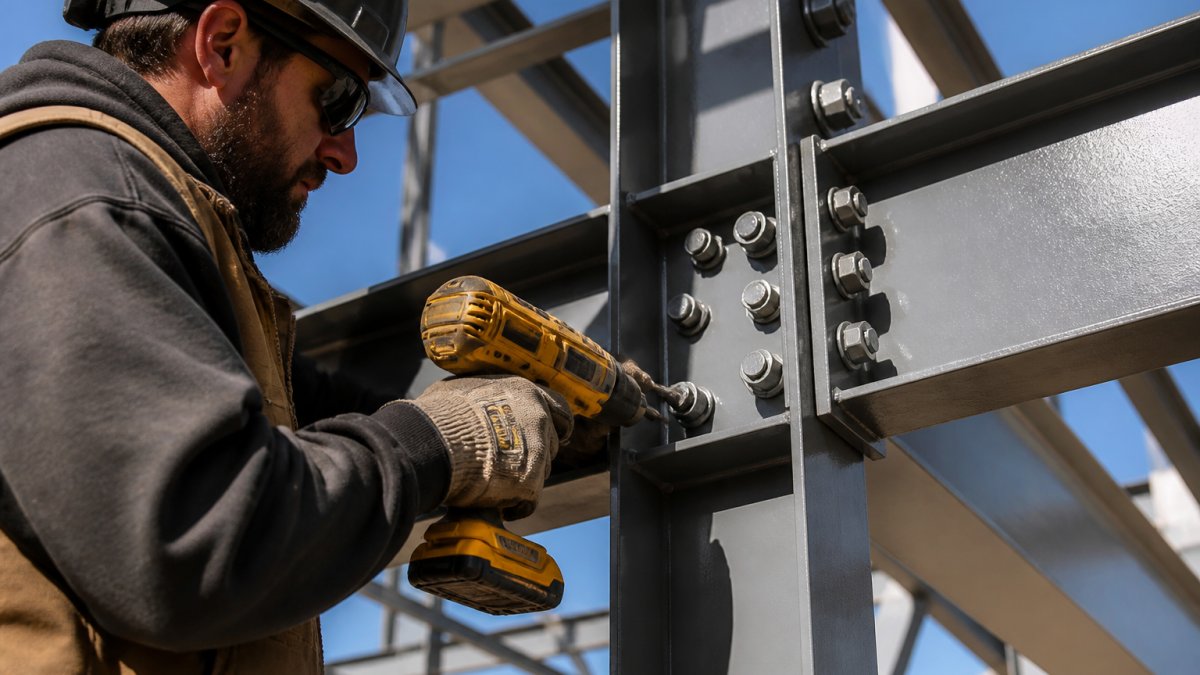
12 gauge steel thickness is the measurement that decides how much load a frame can carry, and it is the number most buyers never check.
Gauge is a backward scale: the higher the number, the thinner the steel. A 12-gauge panel is thicker and stronger than a 14-gauge panel of the same profile. That single difference changes how a building handles snow, wind, and the weight of everything you store inside it.
Manufacturers and suppliers publish gauge rather than thickness because gauge is the industry shorthand. If you want to compare two quotes fairly, ask for the actual steel thickness and the yield strength, not just the gauge number. The American Iron and Steel Institute standards overview explains how steel is classified and tested, which is useful when a supplier’s spec sheet feels vague.
Thicker steel also holds its shape better during shipping and installation. Thin panels dent, bow, and twist before they ever reach your site. That is a quality problem disguised as a handling problem.
Ask any supplier for the gauge and the steel thickness in writing before you sign. A quote that lists only “heavy-duty steel” is telling you nothing you can verify.
12 Gauge vs 14 Gauge Steel Framing: Strength, Load, and Cost
The 12 gauge vs 14 gauge steel framing comparison comes down to one trade-off: 14 gauge costs less up front, and 12 gauge costs less over the life of the building.
| Factor | 12 Gauge Steel | 14 Gauge Steel |
|---|---|---|
| Steel thickness | Thicker | Thinner |
| Load-bearing capacity | Higher | Lower |
| Wind and snow performance | Stronger under load | Adequate in mild climates |
| Sagging and deflection | Resists better | More prone over time |
| Best for | Large or heavy openings | Light-duty, mild-weather use |
| Upfront cost | Higher | Lower |
| Lifecycle value | Lower cost per year of service | Higher replacement risk |
This is where the price objection usually shows up. A 14-gauge building looks cheaper on the quote, and it is. But if the frame sags in year six or a heavy snow season bows a wall, the savings disappear into repairs or a full replacement.
For a carport in a mild climate with light use, 14 gauge can be a reasonable choice. For a shop, barn, or garage that will hold tractors, RVs, or heavy equipment, 12 gauge is the safer bet. We would not sell a heavy-use structure in 14 gauge, and we would rather lose the sale than build something that fails.
Wind, Snow, and Structural Performance You Can Count On
Structural performance is where the gauge difference stops being theoretical, but it is also where most marketing copy gets sloppy. Wind load, snow load, and deflection do scale with steel thickness, yet the number on a spec sheet is never produced by gauge alone.
Wind load is the lateral and uplift force a building must resist during high winds. Thinner steel flexes more under the same gust, and repeated flexing works fasteners and connections loose over time. Thicker steel holds its geometry and keeps the load path intact.
Snow load is the weight of accumulated snow on a roof, expressed in pounds per square foot (psf).
Deflection and sagging are the slow failures. A beam that bends slightly under load every season never fully returns to shape. Over years, that shows up as a sagging roofline and doors that no longer close cleanly.
Engineers calculate these loads using published building codes and standards. The American Society of Civil Engineers load standards set the framework engineers use to size structures for wind and snow, and the International Code Council building codes publish the model codes that most jurisdictions adopt.
A building rated for one region’s snow load is not automatically safe in another. Buying a structure certified for a lighter snow zone and installing it where winters are heavier is one of the most common and most expensive mistakes we see. The same logic applies to wind: a rating tied to one exposure category does not transfer to a site with different terrain or obstructions.
Gauge sets the ceiling on how much load a frame can carry. Spacing, spans, connections, and site conditions decide how close to that ceiling you actually get. Ask for the stamped engineering drawings, not just the gauge number.
Light Gauge Steel Framing Disadvantages (and How 12 Gauge Solves Them)
Light gauge steel framing disadvantages are real, and they are mostly about thin steel: less load capacity, more flex, and a shorter service life under heavy use.
The drawbacks worth knowing:
- Thin steel deflects more under wind and snow, which can crack finishes and bind doors over time
- Lighter frames transmit more noise in high winds and heavy rain
- Steel is a poor insulator, so thermal bridging through the frame can cut effective R-value if the envelope isn’t detailed correctly
- Thin panels dent during shipping, handling, and installation
- Steel conducts heat, so fire performance depends on assembly details, not the frame alone
- Connections matter more than most buyers realize, a thick panel with undersized fasteners or missing bracing fails at the joint, not the panel
None of these are reasons to avoid steel. They are reasons to avoid thin steel and sloppy detailing.
Here is how 12 gauge addresses each one.
Deflection and noise. The added thickness raises load capacity, which reduces deflection and the drumming that thin panels produce in wind. Bracing and blocking at openings and corners stiffen the frame further.
Thermal bridging. Steel framing creates a continuous path for heat to escape through the wall.
Handling and installation. Thicker panels survive shipping and installation without the dents that plague lighter material, but they are heavier to lift and require the right fasteners.
Fire performance. Steel does not burn, but it conducts heat and loses strength at high temperatures.
What most guides miss is that “light gauge steel” is a category, not a single product. It covers everything from very thin panels up to 12 gauge and beyond.
When you compare quotes, ask three questions: what gauge, what fastener schedule, and what thermal break. A supplier who can answer all three is building a system. A supplier who only talks about gauge is selling a panel.
How to Choose Steel Gauge for a Metal Building
Choosing the right gauge comes down to three questions: what will the building hold, what weather will it face, and how long do you need it to last?
Use this decision framework:
- Light use, mild climate, short horizon: 14 gauge may be adequate for a simple carport or storage shed.
- Heavy equipment, RVs, tractors, or livestock: 12 gauge, because the load and the consequences of failure are higher.
- Heavy snow or high wind region: 12 gauge, and confirm the engineer-certified rating for your specific location.
- Large or heavy openings: 12 gauge, because wide door and window openings need a stiffer frame to avoid sagging.
- Long-term investment on your property: 12 gauge, because the cost per year of service is lower.
If you are unsure, ask for the engineering documentation. A supplier who can show certified load ratings for your area is a supplier who has done the math. A supplier who can’t is asking you to take their word for it.
The right gauge is the one that matches your heaviest load and your worst weather, not your lowest quote. Under-building is the one mistake you can’t fix after installation.
Long-Term Value: Durability, Warranty, and Maintenance
Durability over decades is where 12 gauge steel framing earns its cost. Thicker steel resists corrosion longer because it takes more time for rust to eat through the material. It holds its dimensions through temperature swings, so doors, panels, and openings stay aligned.
This is also where warranty terms matter. Terrapin Steel Buildings backs 12-gauge steel framing with a 20-year manufacturer’s warranty, which is the kind of coverage that only makes sense when the frame is built to last. A warranty on thin steel would be a liability, not a selling point.
Maintenance is the other half of the value story. A steel frame does not rot, warp, or attract termites the way wood framing can. There is no repainting, no treating, and no replacing rotted members. For a farm or a rural property where you have enough to maintain already, that matters.
One customer put it plainly after buying a large shop for their farm: the tractors and equipment no longer sit out in the rain and sun, and the shop doubles as a place to do maintenance out of the heat.
Conclusion: Is 12 Gauge Steel Framing Right for Your Property?
The benefits of 12 gauge steel framing come down to a simple idea: build the frame strong enough that you never have to think about it again. Thicker steel carries more load, resists wind and snow better, sags less, and lasts longer than thin alternatives.
If your building will hold heavy equipment, face real weather, or stand on your property for decades, 12 gauge is the right call. If you are weighing a lighter structure for mild conditions and light use, at least make that choice with the numbers in front of you.
That is exactly what we do at Terrapin Steel Buildings. Every structure we sell is 100% American-made, engineer-certified to meet local or state codes, and installed by factory-trained, licensed, and insured crews. Our buildings are highly customizable, so you get a structure that fits your property rather than forcing your property to fit a standard size. And every 12-gauge frame carries a 20-year manufacturer’s warranty.
Get started with Terrapin Steel Buildings and protect what you’ve worked for with a structure built to outlast the weather.
Frequently Asked Questions
What does the thickness of 12 gauge steel mean?
Gauge measures steel thickness: lower numbers mean thicker steel. A 12-gauge steel sheet is about 0.1046 inches thick, while 14-gauge is about 0.0747 inches. That difference makes 12-gauge roughly 40% thicker, which translates to greater load capacity and resistance to bending. For metal buildings, thicker framing means the structure can handle heavier snow, higher winds, and larger clear-span openings without sagging.
Is 12-gauge steel framing stronger than 14-gauge framing?
Yes. Because 12-gauge steel is thicker, it has a higher load-bearing capacity and better resistance to deflection. In practice, a 12-gauge frame can support heavier roof loads and wider spans than a 14-gauge frame. If you live in an area with significant snow or high winds, 12-gauge provides a safer margin. However, the building’s engineering and design also affect overall strength, so always confirm the structure is certified for your local conditions.
What are the disadvantages of light gauge metal framing?
Light gauge steel, such as 16 or 18 gauge, is thinner and can be more prone to denting, sagging, and damage from extreme weather. It may not meet structural requirements for large openings or heavy snow loads without additional reinforcement. Also, thin steel can be noisier and may require more careful insulation to prevent thermal bridging. For durable, low-maintenance structures, thicker gauges like 12-gauge are often a better choice despite a higher upfront cost.
When should you choose 12-gauge steel framing for a metal building?
Choose 12-gauge steel framing when you need a structure that will stand up to demanding conditions: areas with heavy snowfall, high wind zones, or where you plan large clear-span openings for RVs, tractors, or equipment. It’s also a smart choice if you want a long-lasting building with minimal maintenance. For smaller, sheltered structures, a lighter gauge might suffice, but 12-gauge offers peace of mind and often a longer warranty.